
Last Updated: October 30, 2026
Quick Summary
A professional basement waterproofing contractor is worth hiring when the water source is properly diagnosed and the work is clearly defined in writing before any repairs begin. Interior drainage manages water already entering, while exterior work addresses the source at the foundation. Compare written scopes line by line, not just total prices.
- Diagnose the water path first, since grading, gutters and the floor-to-wall seam are common sources.
- Interior systems manage water already inside; exterior work addresses water pressing against the foundation.
- Backup power for the sump pump is the item homeowners most often skip and later regret.
- Verify insurance, permit handling and references from comparable projects before choosing a contractor.
- Read the warranty document itself, including transferability and any required maintenance.
Table of Contents
- Diagnosing Where Your Basement Water Is Coming From
- Basement Waterproofing Methods and Their Trade-Offs
- What a Basement Waterproofing Cost Looks Like in New Jersey
- What a Written Basement Waterproofing Estimate Should Include
- How to Vet a Professional Basement Waterproofing Contractor in NJ
- Reading the Basement Waterproofing Warranty Before You Sign
- Requesting Your Free Quote from Almark Construction
- Frequently Asked Questions
Basement water problems rarely fix themselves, and a damp basement can quietly damage framing, finishes and stored belongings for years. For homeowners across New Jersey, the real question is not whether to act, but whether a professional basement waterproofing contractor is worth the cost. You can also learn about Almark Construction’s background and service area before you contact any contractor.
Diagnosing Where Your Basement Water Is Coming From
Most homeowners assume the water comes through the walls, but the source is often the grading, the gutters or the floor-to-wall seam. Start by noting when the water appears.
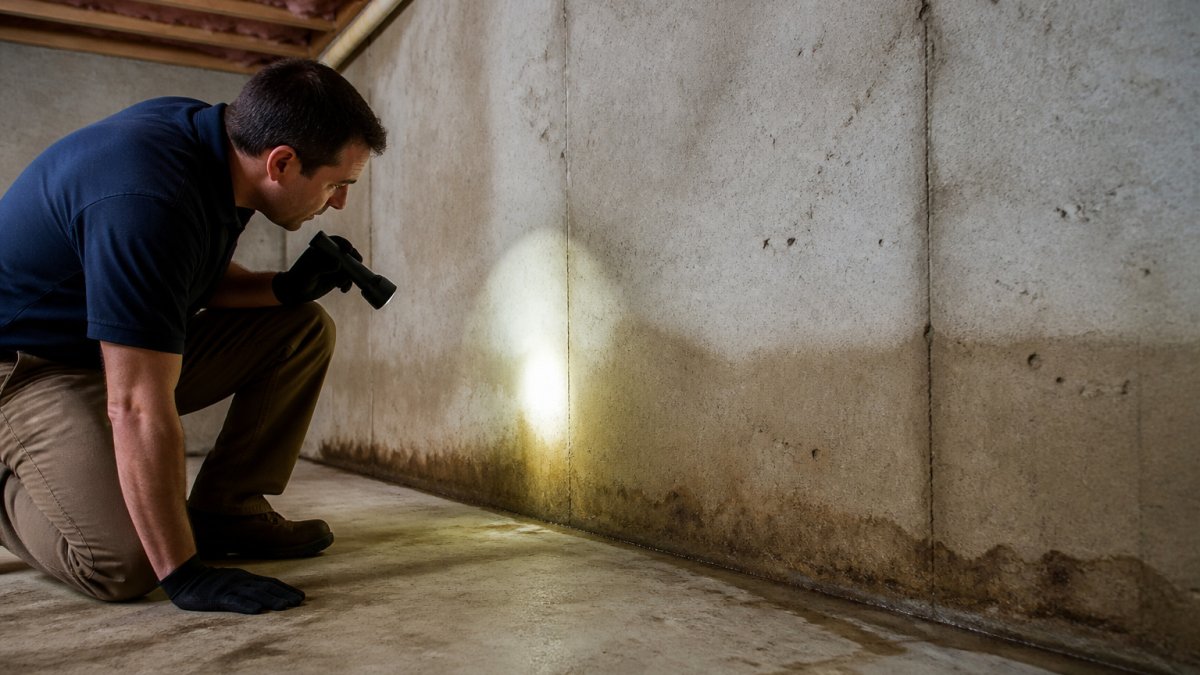
Walk the outside of the house with a garden hose and a helper. If grading or surface runoff is the cause, you can review site work and drainage solutions in New Jersey to see what corrective work involves.
Basement Waterproofing Methods and Their Trade-Offs
There is no single best method. The right choice depends on the source of water, the condition of the foundation and how much disruption you can accept. Interior and exterior approaches solve different problems, and many projects combine both.
Interior Drainage and Sump Pump Systems
Interior systems collect water that has already entered the basement and move it out through a sump pump. The work stays inside the home. They do not stop water from pressing against the foundation, so they manage the symptom more than the cause. A sump pump needs power, a backup source for storm events and periodic testing. Ask any contractor how the system handles a power outage, because that is when most failures happen.
Exterior Waterproofing and Foundation Protection
Exterior work addresses water at the source by excavating the foundation wall, repairing cracks and applying a membrane or drainage board. It is more invasive and typically costs more, but it protects the structure from the outside. You can review foundation and concrete services for New Jersey homes to see how foundation walls are repaired and protected.
The two main approaches differ in where they act and what they cost to install.
| Method | Best for | Key difference |
|---|---|---|
| Interior drainage and sump pump | Water already entering the basement | Manages the symptom; work stays inside |
| Exterior waterproofing | Water pressing against the foundation | Addresses the source; more invasive and costly |
| Crack injection | One localized leak | Lowest cost, only if it is the sole water path |
What a Basement Waterproofing Cost Looks Like in New Jersey
Pricing depends on the source of the problem, the length of foundation involved, access, soil conditions, and whether exterior excavation is needed. For current pricing for your property, visit the Almark Construction website or request a free quote.
The main cost drivers
- Access and excavation difficulty. A foundation that can be reached by machine is cheaper to excavate than one blocked by decks, driveways, landscaping, or mature trees. Hand digging adds labor hours.
- Foundation type and condition. Poured concrete, block, and stone foundations behave differently. Block and stone walls often need more prep, crack repair, and parging before a membrane or drainage board goes on.
- Sump pump and discharge. A basic submersible pump with a check valve is one line item; a primary and backup system with a battery or water-powered backup, an airtight lid, and a buried discharge line is another. Backup power is the item most homeowners skip and most often regret.
- Interior finishes and restoration. If the scope requires removing studs, drywall, or flooring, that labor and disposal is a separate cost. Ask whether restoration is included or excluded.
Typical ranges homeowners should plan for
Most practitioners find that interior drainage and sump systems fall in the low-to-mid thousands of dollars for a typical residential perimeter, while exterior excavation and membrane work runs several times higher because of the digging and restoration involved. Crack injection and spot repairs are usually the least expensive entry point when the diagnosis confirms a single localized leak. These are planning ranges, not quotes: the only reliable number comes from an on-site inspection that identifies the water path.
Sample scenarios
- Scenario A: seepage at the floor-to-wall seam after heavy rain. Likely scope is interior drainage along the affected walls plus a sump pump and discharge. Expect a mid-range interior project with a written scope naming the pump model and discharge location.
- Scenario B: bowing block wall with active water pressure. Likely scope is exterior excavation, wall repair or reinforcement, membrane, and drainage board, plus grading and downspout corrections. This is the highest-cost category and should include a structural assessment.
- Scenario C: one horizontal crack leaking after snowmelt. Likely scope is crack injection and exterior grading correction. This is the lowest-cost category, but only if the inspection confirms the crack is the sole path.
Be cautious with any bid that is dramatically lower than the others. A low bid often means a smaller scope, a lower-grade pump, no permit, or no restoration. Compare the written scope line by line before you compare the totals.
For a figure specific to your property, request a written estimate after an on-site inspection, and compare line items rather than totals. An estimate that lists only “waterproofing” without naming the method, materials, and scope is hard to compare with anything else.
What a Written Basement Waterproofing Estimate Should Include
A useful written estimate names the diagnosed water source, the recommended method and the exact scope of work. It should list materials, labor, permit handling, cleanup and any sump pump or drain components. It should state what is excluded, such as drywall replacement or landscaping restoration. It should also include the schedule, the payment terms and the warranty. A vague estimate is a warning sign, not a bargain.
How to Vet a Professional Basement Waterproofing Contractor in NJ
Most homeowners compare contractors on price alone, which is the fastest way to end up with a system that does not match the water problem. A better approach is to run every candidate through the same checklist so you can compare like with like. The steps below help you tell a professional waterproofing contractor from a sales-driven installer.
1. Confirm the business is registered and insured
Ask for the legal business name, the state business registration, and a certificate of insurance showing general liability and workers’ compensation coverage. Call the insurer listed on the certificate to confirm the policy is active and that the coverage limits match what the contractor claims. If a crew member is injured on your property and the contractor has no workers’ compensation coverage, the exposure can land on you as the homeowner.
2. Ask how permits are handled
Waterproofing and foundation work often triggers local permit requirements, especially when the scope includes structural repair, new drainage connections, or electrical work for a sump pump. A professional contractor will tell you which permits apply, who pulls them, and whether the fee is included in the estimate. A contractor who suggests skipping the permit to save time is telling you how they will handle every other part of the job.
3. Request references from comparable projects
Ask for three references from the past 12 months, and ask specifically for jobs that match yours: same foundation type, same water source, same access constraints. When you call, ask what the crew was like, whether the scope changed mid-project, how change orders were priced, and whether the contractor returned for any follow-up. A reference list of only new-construction or commercial jobs is not a substitute.
4. Get a written scope, not a verbal promise
The estimate should name the diagnosed water source, the method, the materials and brands, the linear footage or square footage involved, the sump pump model and horsepower if applicable, the discharge location, and what is excluded. It should state who is responsible for patching concrete, replacing drywall, and restoring landscaping. Compare line items across bids rather than totals, because a low total often means a smaller scope.
5. Read the warranty before you sign
Ask for the warranty document itself, not a summary. Check the coverage period for workmanship versus materials, whether the warranty is transferable to a future owner, what maintenance is required to keep it valid, and how a claim is filed. A lifetime warranty that requires annual paid maintenance is a different product than a 10-year workmanship warranty with no service contract.
6. Watch for these warning signs
- A quote given before anyone inspects the basement or the exterior grading.
- Pressure to sign the same day for a discount that expires.
- No physical business address or a phone number that only reaches an answering service.
- A scope that lists “waterproofing” as a single line item with no method or materials.
- Reluctance to put the warranty or the exclusions in writing.
Create a one-page comparison sheet with columns for license and insurance verified, permits included, references checked, scope detail, warranty terms, and total price. Score each bid the same way. The contractor with the clearest written scope is usually the safer choice even when the total is not the lowest.
Almark Construction is committed to transparency and to keeping clients involved, so you will know what is happening at each stage.
Reading the Basement Waterproofing Warranty Before You Sign
A warranty is only as useful as its terms. Read what is covered, for how long and whether it is transferable if you sell the home. Check whether it covers the sump system, the membrane, the workmanship or all three. Ask what maintenance the warranty requires, such as testing the pump or keeping gutters clear, because a claim can be denied for neglect.
Requesting Your Free Quote from Almark Construction
If you are weighing a basement waterproofing project, the most useful next step is to get a free quote to start the conversation. You can also contact Almark Construction by phone or form to ask about inspection timing, scope and warranty terms before you commit.
Almark Construction serves homeowners across Monmouth, Ocean and Middlesex Counties. Ask us what you should expect before any work begins.
Frequently Asked Questions
How do I choose a basement waterproofing contractor?
Start with licensing and insurance. In New Jersey, confirm the contractor carries general liability and workers’ compensation coverage and ask for proof in writing. Then ask for references from recent projects in your county, look for a written site assessment before any quote is issued, and check that the company will explain the cause of the water, not just sell a fix. A contractor who pressures you to sign the same day or cannot name the materials and methods they plan to use should be ranked lower on your list.
What should a basement waterproofing estimate include?
A complete basement waterproofing estimate should list the scope of work, the specific methods proposed (such as interior drain tile, sump pump installation, or exterior excavation), the materials and their brands, the labor, any permits, cleanup, and the timeline. It should also state the warranty terms and payment schedule. If a bid is a single lump-sum number with no breakdown, ask the contractor to itemize it before comparing it against other quotes.
How much does professional basement waterproofing cost?
Pricing depends on the size of the basement, the method chosen, how much excavation or concrete work is needed, and how many wall sections are affected. Almark Construction does not publish fixed prices for this service, so the most accurate figure comes from an on-site assessment and written quote. Visit the Almark Construction website or request a free quote for current pricing for your property.
Does basement waterproofing come with a warranty?
Many contractors offer a workmanship warranty and may pass through a manufacturer’s warranty on materials such as sump pumps or drainage membranes. Read the warranty for its length, what it covers, whether it is transferable if you sell your home, and what maintenance you must perform to keep it valid. Ask whether it covers recurring seepage in the same location and how claims are handled.
